Posts

The Influence of Victim-Blaming

Image
Domestic violence and sexual assault are difficult topics to discuss. In today's society, there seems to be a stigma that goes along with these two issues, a stigma that unfortunately incorporates victim blaming.  Victim blaming is when the victim of a crime is held solely or partially responsible for the wrongful act done upon them. A recent example of victim blaming happened in the People v. Turner case. Brock Turner blamed college party culture and consumption of alcohol for a sexual assault he initiated rather than taking responsibility for the horrendous crime he committed. Turner, a former Stanford University student-athlete, sexually assaulted an intoxicated, unconscious woman behind a dumpster, whom he met at a house party. Turners’ defense attorney contributed to the victim-blaming when his way of defending this case was to point the finger at the victim and fixate on how much she drank on the evening of the sexual assault. Victims of sexual assault, more times t...
Violence and the LGBTQ Community

LGBTQ individuals face a lot of adversity from their families and society.  The June 12, 2016 mass shooting at the Orlando nightclub, Pulse, reminded us that hate of the LGBTQ community often manifests itself as violence. LGBTQ people  often have difficulty coming out or being open to their families and in society because of a lack of acceptance, aggression, and misinformation. Additionally, many in the LGBTQ community face the trauma of domestic violence. LGBTQ individuals experience domestic violence within their relationships at about the same rate as heterosexual people. According to Amy Caffrey, LMFT, Training Materials for Next Door, Solutions to Domestic Violence 10/01, “Domestic violence is a serious issue in Lesbian, Gay, Bisexual and Transgender (LGBT) relationships. Domestic violence occurs in same-gender relationships at the same rate as heterosexual relationships (about 1 in 4).”  In recent years, society seemed to show some acceptance of the L...

The Struggle is Real

No really, it is. For victims and survivors of domestic violence coming into safe houses, the struggle is real, especially in rural areas. Our Union County safe house has been full to capacity lately. Not only do these clients have to deal with the severe trauma they’ve experienced, but they have to figure out how to support themselves and their children. Many of them were financially dependent on their abusive partners. This requires them to find a job, sometimes with no prior job experience. Or if they have a job, they may struggle to keep it, depending on new transportation and child care issues. On top of employment issues, they have to find housing since the stay in our safe house is only temporary. In a rural place, this is no easy task. Waiting lists are long, rents are expensive, and landlords are not always cooperative. All of this while dealing with the effects of enduring trauma. Many are depressed, have low self-esteem or experience PTSD symptoms. This can prevent surv...

Strength, Courage, and Power of a Student Athlete

Every year I am involved in a college scholarship selection process for a graduating male student-athlete who wishes to continue their education and participation in athletics past high school.  Included on the application for consideration, is one very significant question, “What does being a student-athlete mean to you?”  This question always brings about the most interesting responses. The essays have mentioned everything from the importance of “leadership and discipline” and the vital role that parents play in getting their children to practices and games to what seems to be a well-rehearsed “acceptance speech” directed to a particular coach (or coaches) for “always being there” and “showing them values and endless possibilities”.  There have even been those who feel that they can make anything happen and change the world because they have had successful academic and athletic high school careers; who use words like “strength, courage, and power” in their essays....

Talking to Kids about Sexuality

Many parents are not comfortable talking to their kids about sex, even though they might want them to know about the changes going on in their developing bodies, the feelings that they will start to have toward the bodies of others, the importance of self-control, birth-control, and how to prevent sexually transmitted infections.  Still, no matter how awkward these talks may be, communicating to your children in an affirming, respectful way really help kids form strong values and make healthier decisions. Some parents, guardians, and teachers have expressed concern that talking to kids about sex and their developing bodies may give them the wrong idea!  However, Karofsky (2000), cites that studies show that teens whose parents talked to them about their sexuality in a warm and caring way were not only less likely to engage in adolescent sexual intercourse, but also less likely to use drugs or become depressed than their fellow teens who were either negatively informed o...

Police Week

May 16 th through the 21 st is Police week.  It is during this week that we reflect upon the importance of law enforcement and the essential role that officers play in our safety and protection.  This is particularly true in regards to calls for service in a domestic violence situation.   When an officer receives a call to a domestic violence incident, they are walking into the most emotionally charged and volatile situation relative to any other call they’ll receive.  The officer must respond with very little information regarding the issue that gave rise to the dispute if any, the aggressor’s history and predisposition towards violence, whether weapons are present and/or what state he/she may find the victim in.  In addition to this highly emotional state, drugs or alcohol are often involved, thus reducing an abuser's threshold for logical reasoning, creating a gravely dangerous state of affairs.   According to the FBI  in 2009, of the 5...

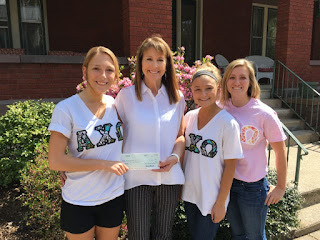
Bucknell Sorority Holds Their Largest Fundraiser Ever to Benefit Transitions

Image
Nicole Chaiko, Alpha Chi Omega VP Philanthropy; Susan Mathias, Transitions CEO; Ayla Rauhala, VP Finance; and Jessica Abruzzese, Chapter President.  Alpha Chi Omega’s annual spring philanthropy event, Alpha Male, was held on March 28th  in Davis Gym. The event was hosted by Alpha Chi’s Philanthropy Chair, Nicole Chaiko, and Gabby Dubose, Assistant VP of Philanthropy. Alpha Male is a comedic male beauty pageant in which men from the fraternities on campus compete for the prestigious title of Alpha Male. The contestants were evaluated by a biography/introduction, interview, swimwear, and talent section. Some of the talents of the contestants this year included playing the saxophone, dancing, singing, and rollerblading.  Thirty percent of the proceeds from this event were awarded to the winning chapter, Kappa Sigma, and donated to the philanthropy of their choice. The remaining seventy percent was donated to Alpha Chi Omegas local philanthropy, Transitions of PA, ...